

Updated July 2026
Beyond Google Workspace
NotebookLM is powerful source-grounded document intelligence. THEUS is a scientific research system that preserves study context, surfaces contradictions and gaps, reviews supplementation, and carries governed facts into traceable synthetic experiments.
- 15 min read
- NotebookLM vs THEUS
Core distinction
Content studio versus research system.
NotebookLM can read, cite, and transform source sets beautifully. THEUS is designed to build a governed Research Base where method, sample, statistical context, contradiction, provenance, and evidence status remain available across workflows.
NotebookLM
Answers from uploaded sources and turns them into shareable artifacts.
THEUS
Organizes evidence into a scientific operating layer teams can inspect, challenge, supplement under review, and simulate against.
“Can we use NotebookLM and Gemini to simulate how consumers would respond to a new product formulation?”
You can prompt NotebookLM or Gemini to adopt a role and generate plausible consumer-style responses. THEUS is designed for a different standard: governed research experiments whose method and evidence remain inspectable, whose supported reasoning traces to source, and whose unsupported behavior stays labeled.
The Google Ecosystem in 2026
Gemini, NotebookLM, and the broader Workspace stack are strong general-purpose AI tools. NotebookLM's source-grounded chat and content formats, together with Google's enterprise controls, make that ecosystem genuinely compelling.
NotebookLM has evolved from a document Q&A tool into a broad content studio with source-grounded chat, audio and video overviews, slide decks, research workflows, tables, and other generated artifacts. Google Workspace also embeds Gemini across core productivity tools.
For general productivity—drafting emails, summarizing meetings, analyzing spreadsheets—this ecosystem is genuinely strong.
What NotebookLM Does Well
NotebookLM is already a capable source-grounded workspace for reading, synthesizing, and packaging source material.
Source-Grounded Intelligence
In source-grounded chat, NotebookLM answers from the selected notebook sources. Inline citations can open the supporting quote or image in context, which makes verification materially easier.
Scale and Format Breadth
Accepts a wide range of sources, including PDFs, Google Docs, Slides, Sheets, Word files, URLs, public YouTube transcripts, images, and audio, with plan-specific source limits.
Content Studio
Audio Overviews in 76+ languages, Deep Research with autonomous web browsing, Slide Decks and Infographics, Data Tables from unstructured sources, and Video Overviews—all generated from the same source set.
Enterprise Readiness
Google provides business and enterprise controls around identity, access, data handling, and administration. Exact capabilities and plan limits should be verified for the buyer's edition.
None of this is vaporware. NotebookLM is a mature, well-resourced product backed by Google's infrastructure.
Where NotebookLM Stops and THEUS Starts
With all that capability, here is the research operating layer THEUS adds.
Behavioral Simulation
NotebookLM's documented center is source-grounded reading, synthesis, and content creation. THEUS carries governed facts into a purpose-built experimental workflow. Here, synthetic experiments begin with synthesis from the Research Base. Their outputs remain modeled hypotheses—not field data. Supported explanations trace through Fact IDs to source; persona-only behavior remains explicitly separate from field evidence.
NotebookLM
“What did our studies report about texture preferences?”
Well-cited synthesis of existing data
THEUS
“How would consumers respond to this untested reformulation?”
Simulated responses grounded in your research data
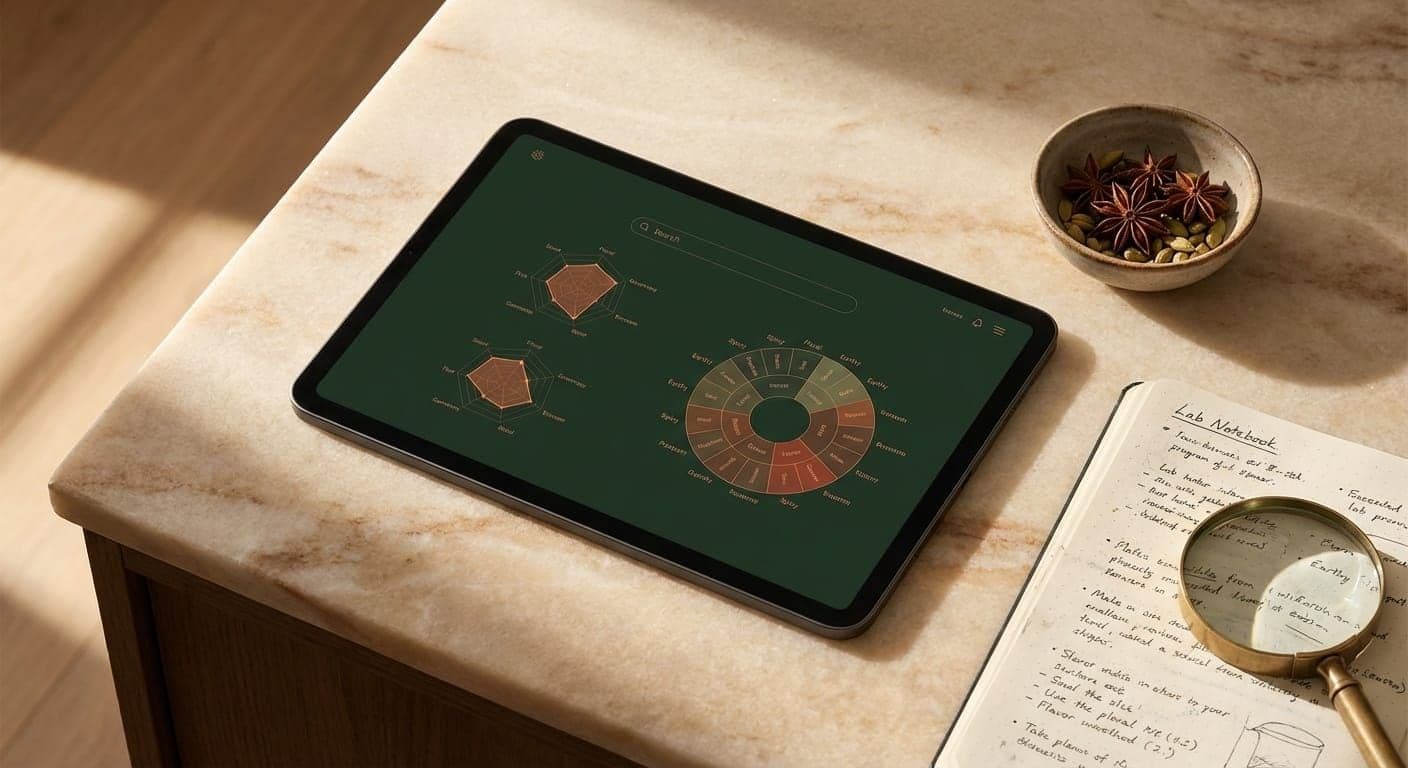
Research Moderation Methodology
NotebookLM's chat is a general Q&A interface. There's no concept of:
THEUS ships with Dr. Evelyn Reed, a moderator agent designed around 20+ years of professional qualitative research methodology. The Project Brief guides the discussion, and the final report separates supported answers from unanswered questions.

The THEUS Simulate workflow, generating behavioral responses grounded in your Research Base
Sensory Science Domain Expertise
NotebookLM uses general-purpose language understanding. THEUS adds sensory-specific extraction and review structures for distinctions such as:
THEUS has domain-specific sensory extraction prompts that understand these formats natively. When the system detects sensory science content, specialized prompts activate that decode significance encodings, read multi-level table headers, and preserve statistical notation.
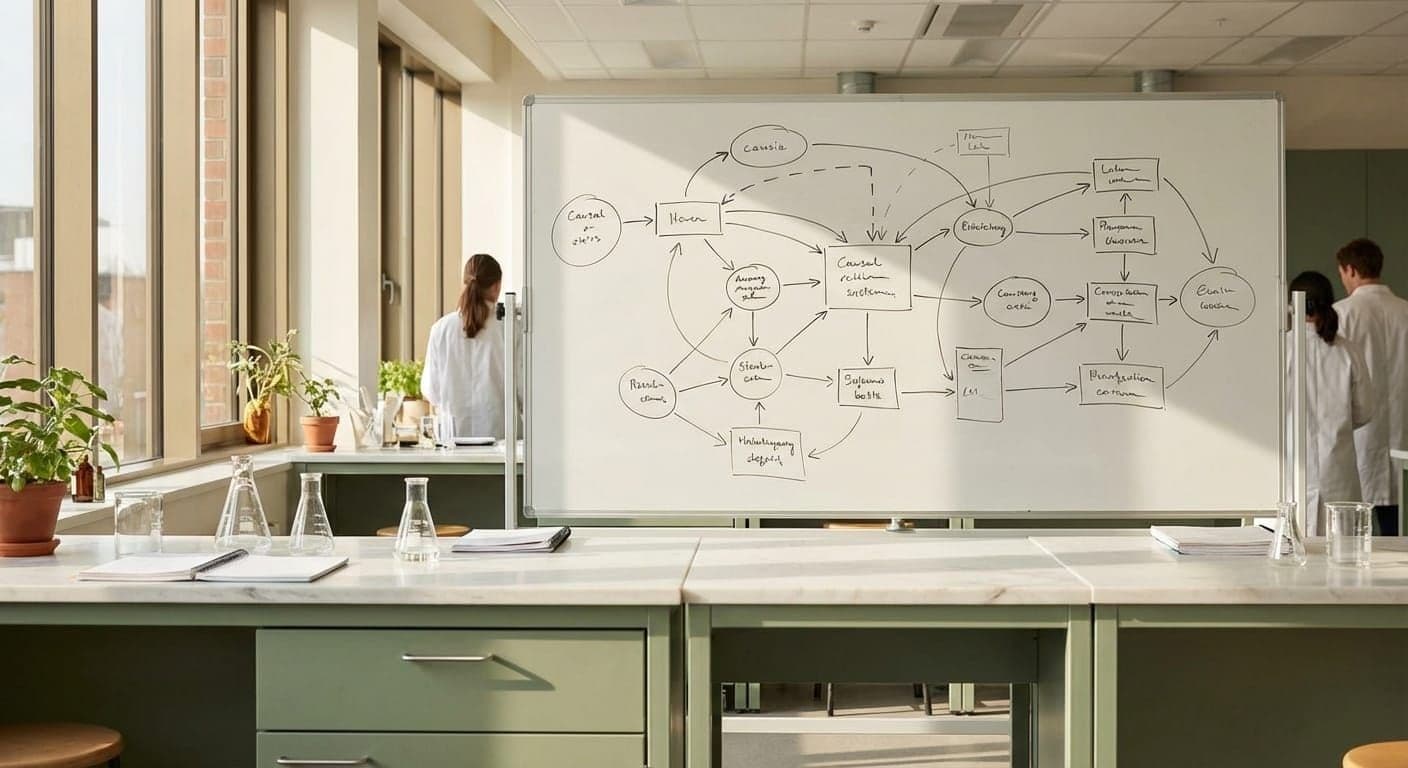
THEUS natively understands TDS curves, JAR distributions, and PCA biplots, not just generic charts
Source Citations vs. a Governed Fact Model
NotebookLM Approach
NotebookLM provides inline citations that open supporting source quotes or images in context. That is a real verification strength for notebook-scoped reading and synthesis.
THEUS Approach
Converts supported research into structured facts with study and page provenance, then carries method, sample, statistical qualifiers, contradictions, and evidence status across workflows.
The Atomic Fact Difference
Generic RAG Output
“The study found significant differences between products”
THEUS Atomic Fact
“Product A (7.2±0.3) scored significantly higher than Product B (6.1±0.4) on sweetness intensity (p<0.05, Tukey HSD, n=120, 9-point hedonic)”
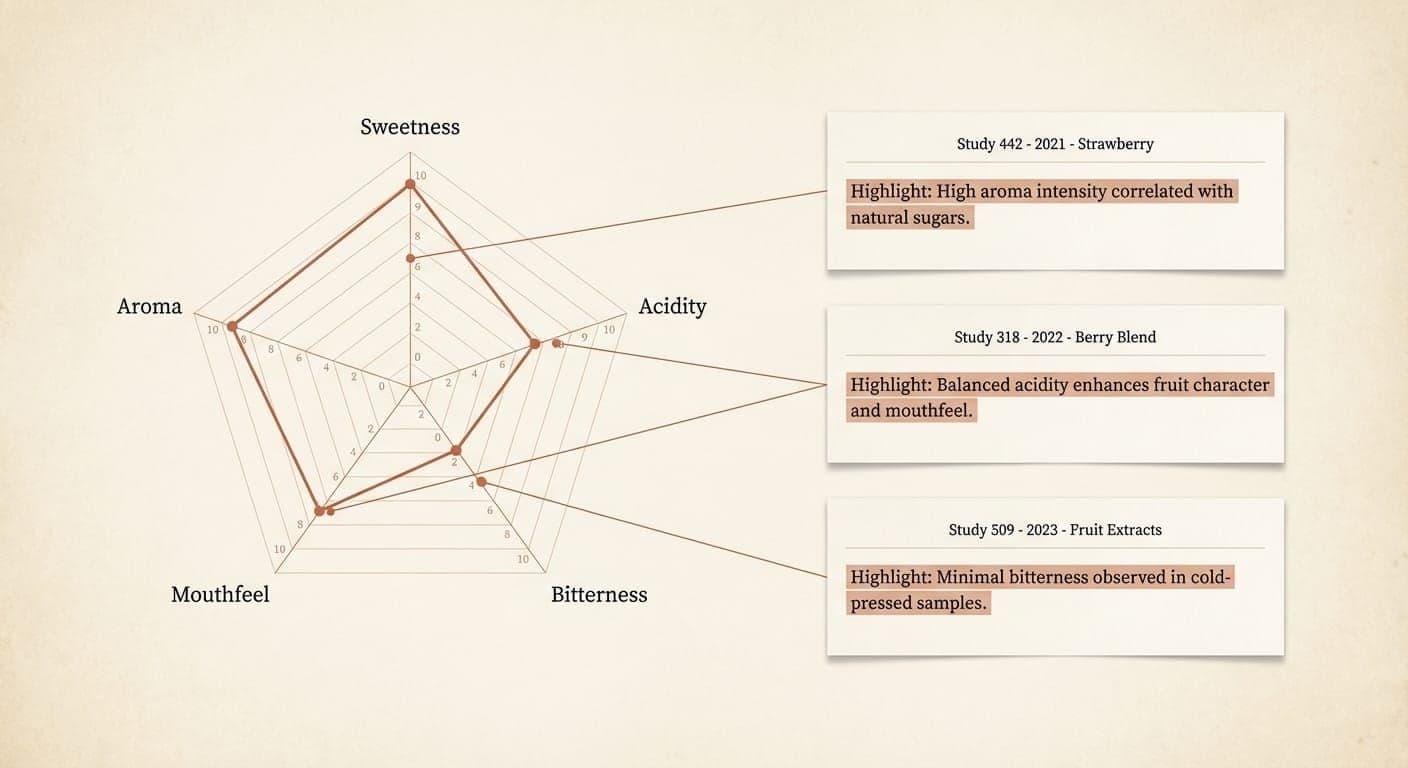
Knowledge Synthesis & Research Gap Detection
THEUS ships with Dr. Theodore Sinclair, a domain-specialized research analyst. Sinclair doesn't just summarize consensus—he is architecturally required to surface conflicts and gaps.
Schema-Enforced Contradiction Detection
Every Research Digest is validated by a Zod schema that requires addressing tensions and contradictions between studies. The summary physically cannot be generated without it.
Cross-Study Reasoning
Aligns product names across documents, cross-validates claims (if a caption says “no difference” but significance letters disagree, trusts the statistics), and connects findings across studies.
Four-Level Research Gap Detection
System-level instructions, follow-up bifurcation for methodology recommendations, phrase-level limitation detection, and summary-level opportunity requirements.
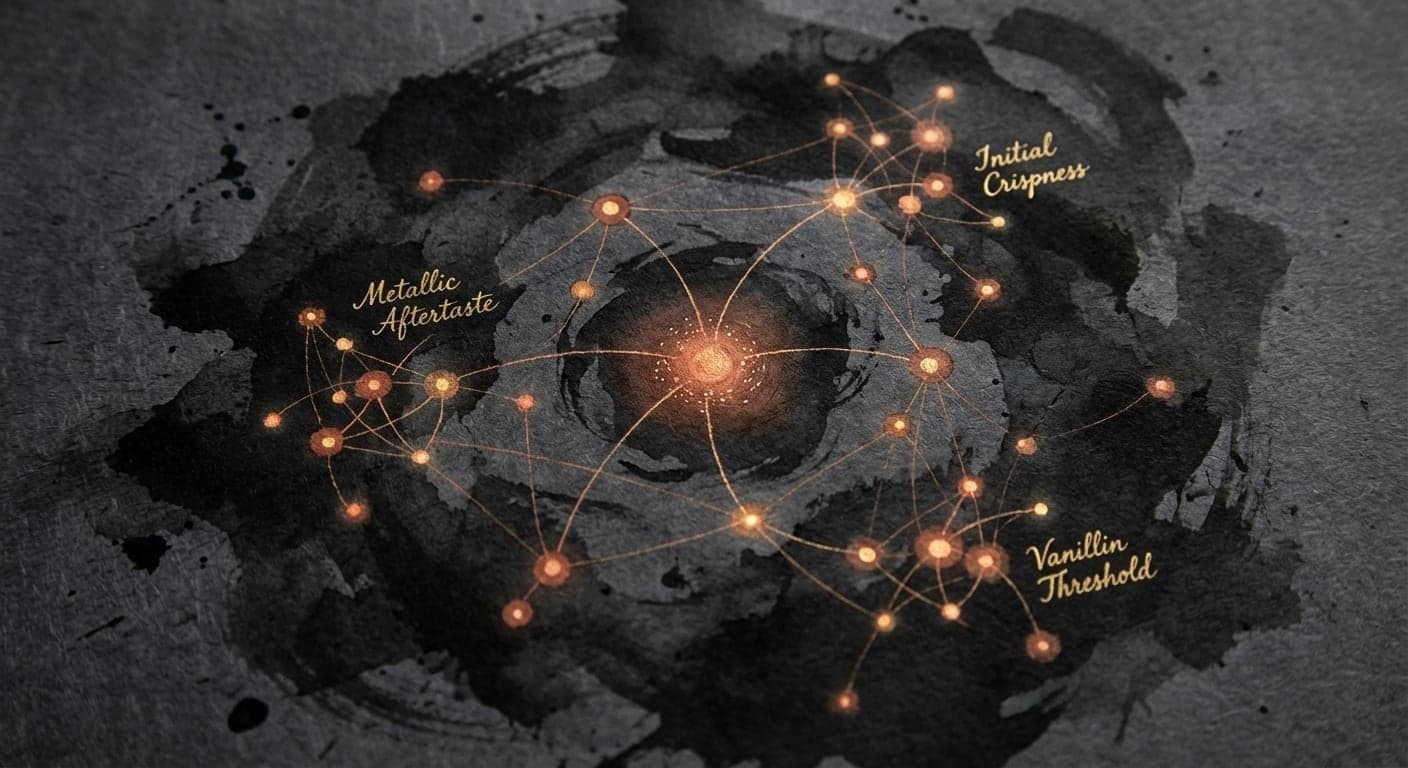
Cross-study synthesis, connecting insights across your research library and detecting knowledge gaps
AI-Generated Research Visualizations
Researchers describe findings in natural language, and THEUS generates publication-ready visual schematics using a dedicated AI image model. Seven style presets from Professional Whiteboard to Corporate Presentation, with conversational refinement—“make the preference drivers more prominent,” “use our brand colors”—and the system iterates on the existing image.
This solves a real workflow problem. Researchers spend significant time translating analytical findings into visual formats for stakeholder presentations. Sinclair analyzes the data; the visualization engine turns that analysis into a diagram a VP can understand in 30 seconds.
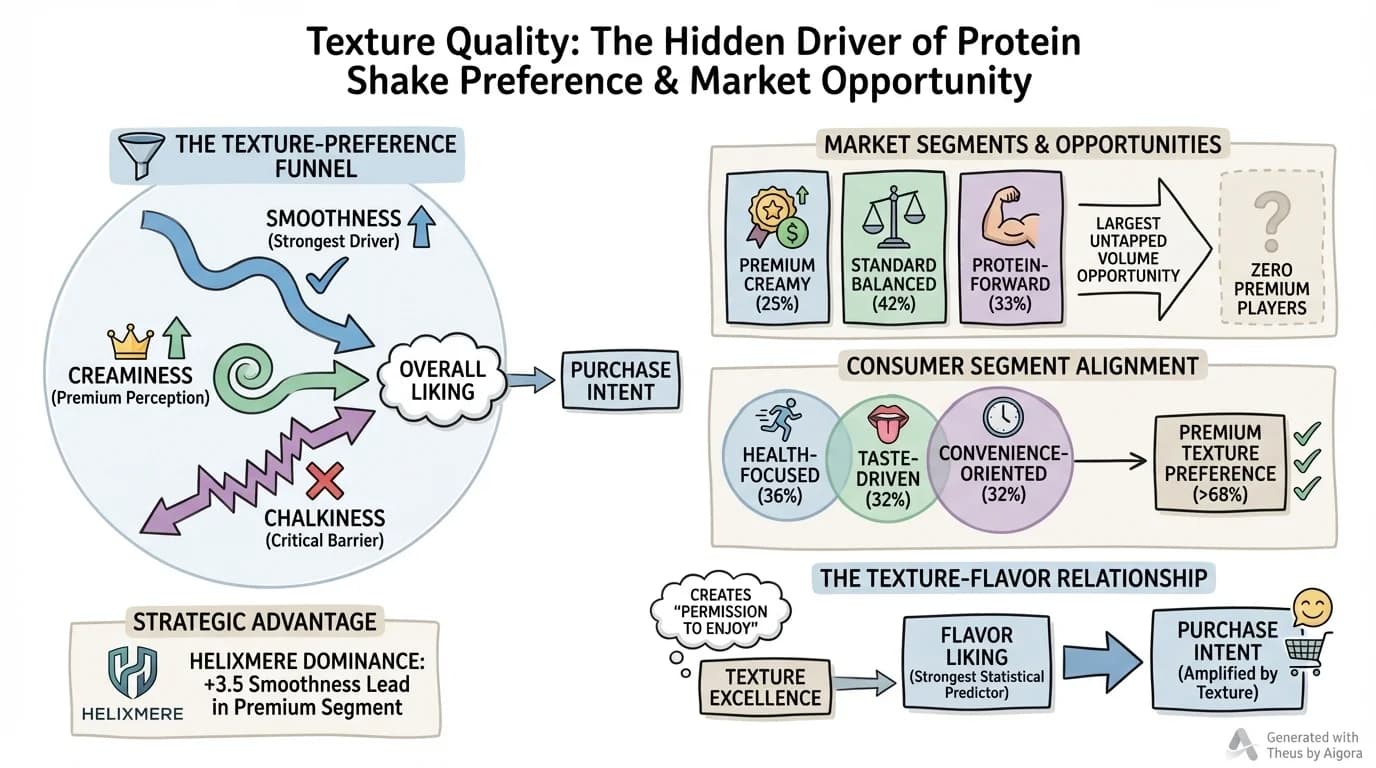
Example: AI-generated research schematic created by THEUS from natural language description
The “Silicon Samples” Problem
When you use NotebookLM's custom chat personas to simulate consumer responses, the academic research on LLMs as synthetic panels remains cautionary.
Drops
Accuracy falls substantially with demographic-only prompts vs. interview data
Nielsen Norman Group
~1/3
Of 14 studies replicated using GPT-3.5
Park et al. (Many Labs 2)
Failed
To replicate endowment effect, mental accounting, sunk cost
Sarstedt et al., Psychology & Marketing
The problem isn't model quality—it's methodology. Prompting any model to “act like a 45-year-old craft beer enthusiast” produces the model's statistical average of that demographic, not an authentic behavioral response. THEUS addresses this by building simulation context from your actual research materials.

Purpose-built for sensory & consumer science teams
Why Custom Personas Don’t Close the Gap
Google Gemini and NotebookLM support “Gems” and system instructions—custom personas you can define. So why isn’t that enough for consumer research simulation?
Six Logic Layers, Not One
A Gem’s system instruction is a single, flat prompt. Every THEUS panelist response is the result of six distinct In-Context Learning layers that fire on every turn:
Behavioral
1,000-1,500 words of generated biography and psychological profiling, fears, insecurities, blind spots, beliefs they'd never say out loud.
Knowledge Base
Direct grounding in atomic facts extracted from your proprietary research, not generic training data.
Memory
A cross-session memory pipeline that ensures a panelist's attitudes remain consistent over time.
Discussion
Personalized transcript history, what this panelist said previously, plus what others said this round.
Voice
Sociolinguistic anchoring: verbal tics, vocabulary matched to education and background, speech rhythm unique to each panelist.
Cognitive
Intelligence calibration across the panel. Not everyone is articulate. Some panelists give confused or circular answers, like real participants.
Multi-Agent Debate, Not Single-Agent Q&A
A NotebookLM conversation is a single agent responding to a single user. Inside a THEUS focus group, you are witnessing a multi-way interaction between a moderator and multiple panelists who debate, challenge, and influence each other across rounds.
Gems / System Instructions
THEUS Simulation Engine
Domain Expertise at Every Stage
In THEUS, every stage of the application—from fact extraction to panelist generation to moderator decision-making—is architecturally biased toward sensory and consumer science. When Explore performs an evidence expansion, it isn’t just searching text; it is executing a domain-specific audit of sources, tracking specific sensory evidence that general-purpose tools often overlook or collapse into vague summaries.
This level of domain-aware agent orchestration and behavioral consistency is not possible with the flat persona declarations found in out-of-the-box consumer AI tools.
The simulation doesn’t come from the base model alone. Gemini provides the reasoning substrate. THEUS provides the governed facts, evidence membrane, behavioral architecture, and domain-specific workflow that make the result inspectable as a synthetic experiment.
Different Tools for Different Jobs
The goal isn't to replace Google—it's to recognize where purpose-built tools deliver better results.
Where NotebookLM Wins
Where THEUS Is Designed Differently
Data Handling
Data security matters for R&D teams protecting proprietary formulations. Here's an honest look at both approaches.
NotebookLM Enterprise
Mature, well-documented security model
THEUS
Time-limited persistent storage with data minimization
The trade-off is real. NotebookLM Enterprise offers more mature infrastructure controls. THEUS offers shorter default retention windows and no permanent index. Neither approach is universally “more secure”—they optimize for different threat models.

The Layered Strategy
For organizations that already invest in Google Workspace, the question isn't “THEUS or Google?”—it's “where does each tool fit?”
Google Workspace + NotebookLM
Broad productivity, team collaboration, document management, research synthesis, Audio Overview briefings, stakeholder presentations. Use this for everything that involves understanding and communicating what your existing data says.
THEUS
Research-grade simulation, domain-specific analysis, and knowledge exploration—when you need to:
The two are complementary. Use NotebookLM to manage your research library and communicate findings broadly. Use THEUS to generate the insights those communications are built on—and to find the contradictions and gaps your team hasn't noticed yet.
The Right Tool for the Right Problem
NotebookLM excels at source-grounded document intelligence. THEUS adds a governed scientific evidence model, visible contradictions and gaps, reviewed supplementation, and clearly labeled evidence-grounded simulation.
The cost of getting this decision wrong isn't a failed pilot—it's stakeholder confidence in AI-assisted research altogether.