

Updated July 2026
Beyond Copilot
Copilot is broad work AI. THEUS is built for a different job: turning multidisciplinary research into a governed Research Base that preserves scientific context from source through gap review and traceable synthetic experimentation.
- 12 min read
- Document retrieval vs simulation
The actual question
Which tool fits which problem?
If a team needs AI across Microsoft 365 work, Copilot is a natural fit. If it needs a governed evidence layer that preserves method, sample, statistical context, contradiction, and provenance, the research requirement is different.
Copilot
Connects chat, search, agents, research, and productivity to Microsoft 365 work data.
THEUS
Builds a scientific Research Base that exposes what is known, what conflicts, and what is missing.
"Can't we just use Copilot? We need to justify every new vendor to the C-suite."
, VP of Consumer Insights, Global F&B Manufacturer
What Copilot Does Well
Microsoft Copilot is genuinely useful across Microsoft 365 work. It connects chat, search, agents, research, and analysis to files, meetings, email, and other permitted work content.
Document Search
Finds relevant passages across SharePoint, OneDrive, and enterprise systems
Summary Synthesis
Creates coherent summaries from multiple documents and data sources
Multi-Agent Orchestration
Agents can hand off tasks and collaborate on workflows (HR + IT + Marketing)
Dynamic Knowledge Access
MCP protocol enables real-time retrieval during conversations
So what's the gap?
Copilot is designed for broad workplace reasoning. Consumer science adds a different requirement: the method, sample, market, statistical qualifiers, contradictions, and source location must remain attached to the evidence. THEUS also turns unsupported questions into visible knowledge gaps and keeps reviewed supplementation and synthetic hypotheses governed.
Executive Summary
Copilot excels at document retrieval. Finding and synthesizing information that exists in your SharePoint is genuinely useful.
Scientific fidelity matters. Research grounding requires fact-level evidence with methodology, sample, statistical context, and exact provenance.
Simulation ≠ retrieval. Exploring concepts you haven't tested yet requires purpose-built tools, not general document search.
THEUS organizes work around a governed Research Base: Simulate with Dr. Reed, then Explore with Dr. Sinclair against the same evidence layer.
The closed loop is key. Build the Research Base → Explore what is known → Simulate better. This integration requires domain-specific architecture.
Could you build it yourself? Theoretically yes, with significant development effort. But why would you, when the tooling exists?
Two Different Problems
The confusion arises because "AI research tools" sounds like one category. But there are actually two fundamentally different problems:
Finding What's Written
"What did last year's texture study say about crunchiness?" or "Find the methodology section from the 2023 reformulation project."
Copilot's Strength
Document retrieval, passage synthesis, cross-referencing existing content
Exploring What's Possible
"How would health-conscious millennials respond to this new protein bar concept?" or "What concerns might emerge if we reformulate with this ingredient?"
Requires Purpose-Built Tools
Data-grounded simulation, fact-level context, methodology-aware reasoning
Copilot's multi-agent orchestration supports broad workplace workflows. THEUS is designed around a different evidence contract: governed research facts become the substrate for synthetic experiments, and the system keeps source-supported reasoning separate from persona and hypothesis.
The "Silicon Samples" Problem
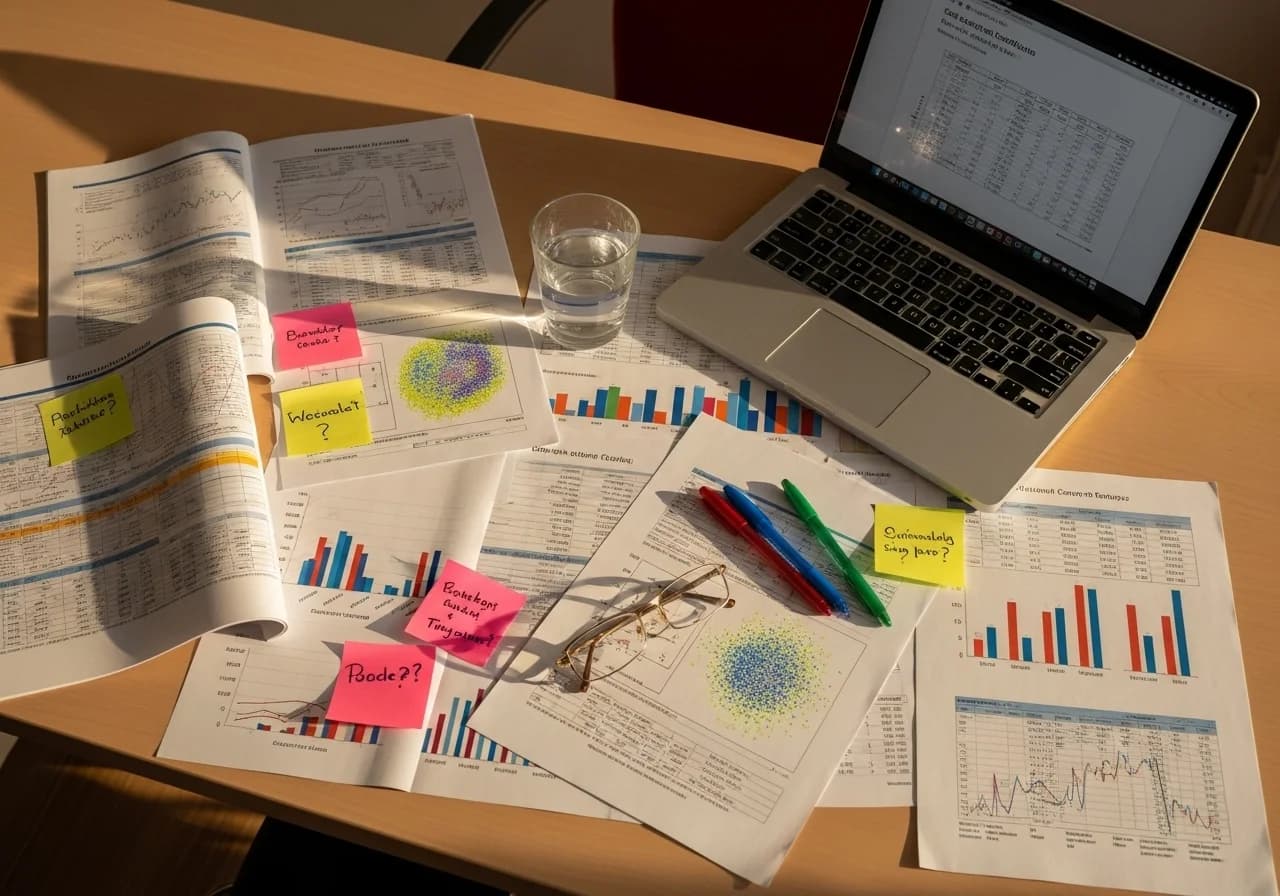
Academic researchers have tested using LLMs as "silicon samples" to substitute for human participants. The results are sobering.
Failed Replications
LLMs fail to replicate core consumer behaviors:
- The endowment effect
- Mental accounting
- The sunk cost fallacy
Only 1/3 Replication Rate
Park et al. re-ran 14 studies from the Many Labs 2 replication project using GPT-3.5. Only about one-third of the results replicated.
"Correct Answer Effect"
For 6 out of 14 studies, GPT showed highly uniform responses that missed the natural variance in human populations.
The Accuracy Gap
| Approach | Accuracy |
|---|---|
| Interview-based digital twins (2-hour transcripts) | ~85% |
| Persona-based models (demographic prompts) | ~70% |
| Basic persona descriptions | Lower still |
That 15-point gap is the difference between insight and noise.
Bias Amplification Through Roleplay
Role-play consistently amplifies bias risk in LLMs. Studies show that assigning personas to LLMs can lead to implicit reasoning biases, increase toxicity, and produce prejudiced outputs.
"When you prompt an LLM to 'act like a 45-year-old working mother concerned about protein intake,' you're not getting that person's authentic perspective. You're getting the model's stereotyped representation of that demographic."

Why Sensory Science Specifically Breaks
These problems are amplified in sensory and consumer science because of what the field actually studies.
Implicit Associations Don't Transfer
GPT failed to replicate effects arising from implicit associations. Sensory science is built on implicit responses, the non-conscious reactions to texture, aroma, mouthfeel that consumers can't articulate.
The Bidirectional Challenge
Sensory science is about the interaction between stimulus and response. You can't simulate how a reformulation will land without understanding both the product's sensory profile AND how consumers process it.
Domain Vocabulary Matters
LLMs don't understand temporal dominance curves, JAR distributions, or category-specific attribute hierarchies. They're pattern-matching on words, not reasoning from methodology.
Sensory Methods Generic AI Can't Parse
TDS Curves
Tmax, Dmax, AUC, dominance rates, chance lines
Time-Intensity
Imax, Tmax, plateau duration, extinction time
JAR/Penalty Analysis
Penalty scores, JAR percentages, drop calculations
QDA Profiles
Attribute intensities, trained panel calibration
Preference Mapping
Vector loadings, explained variance, segment clustering
Multivariate Mapping
PCA loadings, correspondence analysis, MFA coordinates
THEUS extracts these metrics with full statistical context, p-values, effect sizes, sample sizes preserved verbatim.
One Research Base, Two Downstream Jobs
THEUS transforms your historical research into competitive advantage through a governed Research Base with two downstream workflows, each purpose-built for sensory and consumer science.
Simulate
Dr. Reed guides grounded consumer-response testing
Use your Research Base to generate grounded consumer panels. Explore new concepts, test messaging, and discover unexpected reactions, before investing in fieldwork.
- Digital twins built from observed behavior, not stereotypes
- Realistic cognitive diversity (confusion, contradiction, meandering)
- Dr. Reed: expert moderator guiding authentic discussions
Explore
Dr. Sinclair surfaces evidence-backed synthesis
Ask questions across your entire Research Base. Get rigorous, evidence-based answers with full citations, not summary retrieval, but deep analytical reasoning.
- Fact-level extraction with methodology metadata
- Cross-study synthesis and contradiction detection
- Dr. Sinclair: domain-expert reasoning with citations
The Research Base Loop THEUS Is Built Around
Dr. Reed runs a focus group simulation → panelists raise concerns about texture → ask Dr. Sinclair what your historical data says about texture in this category → Dr. Reed runs a better-informed follow-up simulation. Synthetic experiments begin with synthesis of that governed evidence. Their outputs remain modeled hypotheses—not field data. Ask why and supported reasoning traces to source; where the evidence ends, persona and hypothesis stay labeled.
How Simulate Differs From "Just Prompting"
Data-Grounded Digital Twins
THEUS ingests your historical research, panel data, consumer studies, descriptive analyses, and builds digital twins grounded in observed behavior, not demographic stereotypes. That's the difference between generic retrieval and purpose-built research infrastructure.
Bidirectional Modeling
THEUS creates intelligent models of both consumers and products, enabling realistic simulation of how specific reformulation changes would affect specific consumer segments.
Cognitive Diversity by Design
Real focus groups include participants who give meandering answers, contradict themselves, and get confused. THEUS deliberately includes this cognitive diversity, not uniformly articulate AI responses.
Two-Stage Evidence Harvesting
Every THEUS explanation uses a two-stage grounding process: evidence harvest from your Research Base, then reasoning with explicit citations. Full provenance, not plausible narrative.
Document Chunks vs. Research Facts
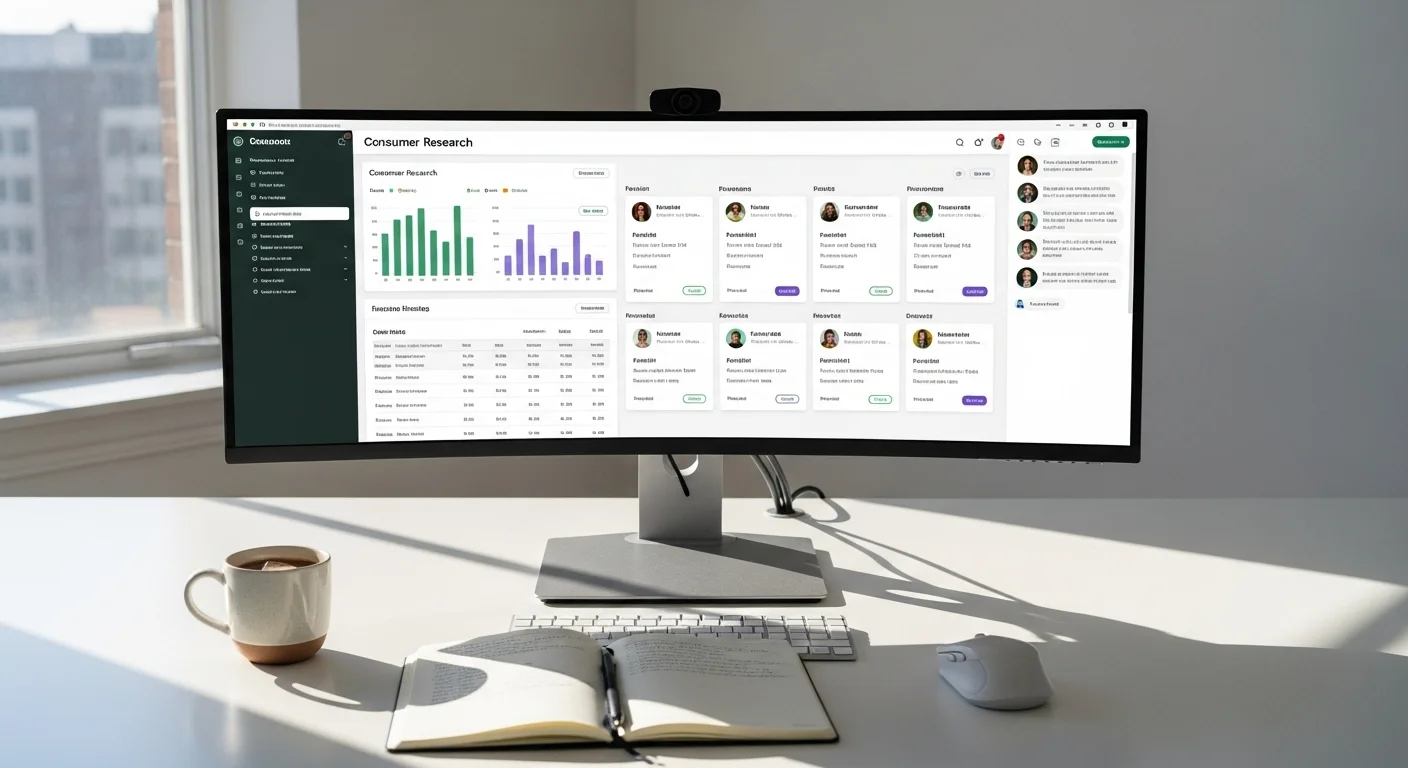
The key difference isn't whether AI can access your documents, both can. It's the level of granularity and the type of reasoning applied to that content.
The Atomic Fact Difference
Generic RAG Output
“The study found significant differences between products”
TKB Atomic Fact
“Product A (7.2±0.3) scored significantly higher than Product B (6.1±0.4) on sweetness intensity (p<0.05, Tukey HSD, n=120 consumers, 9-point hedonic scale)”
THEUS intelligently extracts the facts that matter, each with full methodology context and page-level citations.
Copilot: Microsoft 365 Work AI
Connects reasoning, search, research, and agents to permitted Microsoft 365 files, meetings, email, and work context.
THEUS: Research Facts
Extracts individual findings with full context: source study, methodology, sample characteristics, confidence levels, and relationships between findings.
Meet Your AI Research Team
Dr. Reed
Focus Group Moderator
A seasoned qualitative research moderator who guides focus group discussions with methodological rigor, drawing out authentic responses from data-grounded digital twins.
Guides Authentic Discussions
Uses proven moderation techniques to probe deeper, challenge assumptions, and reveal unexpected consumer reactions.
Manages Group Dynamics
Balances dominant voices, draws out quieter panelists, and navigates disagreements, just like real focus groups.
Adapts to Your Questions
Whisper new directions mid-session to explore emerging themes or dive deeper into surprising responses.

Dr. Sinclair
Senior Research Analyst
Unlike a generic chatbot retrieving passages, Dr. Sinclair is an AI research analyst with deep expertise in sensory and consumer science methodology.
Synthesizes Across Studies
Identifies relevant findings from descriptive panels, acceptance studies, JAR data, and qualitative research, then synthesizes with explicit citations.
Generates Testable Hypotheses
"Your HUT data suggests texture degradation after 48 hours correlates with rejection, but your sensory panel didn't flag moisture migration..."
Critically Evaluates Claims
Rigorous analysis of whether your data actually supports a hypothesis, not just retrieved passages that seem related.
The Executive Summary Problem
Copilot Approach
You ask: "What drives preference in our snack category?" Copilot retrieves executive summaries from several studies and synthesizes them into a nice paragraph.
But executive summaries emphasize what seemed important at the time. They don't capture nuances, contradictions, or minority findings.
THEUS Approach
Dr. Sinclair identifies all relevant facts, weighs them by methodology quality and sample relevance, notes where studies agree and disagree, and constructs an evidence-based answer with full citations.
The difference is epistemic honesty, what the evidence actually supports, not what previous report writers thought was the headline.
The Closed Loop: Simulate + Explore
Dr. Reed runs a simulated focus group. Panelists raise concerns about texture. In Explore, ask Dr. Sinclair: "What does our Research Base say about texture perception in this category?" Dr. Sinclair connects simulation insights to your research history, identifying precedents and flagging pitfalls, then Dr. Reed can run a better-informed follow-up session. THEUS keeps the evidence, gaps, and synthetic status governed across both workflows. Supported explanations trace to source; unsupported behavior remains persona, not evidence.
Different Tools for Different Jobs
The goal isn't to replace Copilot, it's to recognize where purpose-built tools deliver better results.
Microsoft Graph, 40+ connectors
Research-focused ingestion
Passage-level retrieval
With metadata and provenance
Requires custom development
Built-in conflict detection
Not designed for this use case
Data-grounded digital twins
Uniform, articulate responses
Realistic variance by design
Limited chart description
Full multimodal, extracts actual values
Would require custom integration
Native closed-loop workflow
Custom development required
Upload data and start
Knowledge Granularity
Copilot
Document ChunksTHEUS
Individual FactsConsumer Simulation
Copilot
Not designed for this
THEUS
Data-grounded twins
Cognitive Diversity
Copilot
Uniform responses
THEUS
Realistic variance
Time to Value
Copilot
Weeks-MonthsTHEUS
Same DayWhen Copilot Is the Right Choice
Let's be clear about where general-purpose enterprise AI wins:
Summarizing existing research reports, SOPs, regulatory submissions
Transcribing and summarizing panel sessions you've already run
Drafting stakeholder updates based on project data
Processing forms, routing approvals, scheduling
If your need is "I need to find information that exists somewhere in our SharePoint," Copilot is excellent.
If your need is "I need to simulate how consumers would respond to a product concept we haven't tested yet," that's a fundamentally different problem.
The Real Stakes
The sensory analysis market is projected to grow from $5.08B (2025) to $9.65B by 2033. The pressure on insights teams has never been higher.
$2-5M
Failed launch cost
18-24
Months to launch
80%
Fail within 2 years
The Hidden Cost of “Good Enough” AI
Prompting Copilot to “act like a consumer” will give you confident, articulate, stereotype-reinforced responses that look plausible in a PowerPoint. But when you reformulate based on those responses and the product fails in market:
- R&D budget burned on a direction consumers never validated
- Launch window missed while competitors move faster
- Brand trust damaged when product disappoints
- Stakeholder confidence lost in AI-assisted research
The difference between generic AI and purpose-built research infrastructure isn't a technical nuance, it's the difference between a successful launch and a multi-million dollar write-off.
The ROI Case for Specialized Tools
Copilot is valuable across Microsoft 365 work. THEUS is the research-specific layer for fact-level evidence, methodology-aware reasoning, visible gaps, reviewed supplementation, and an audit trail back to the source.
The cost of getting this decision wrong isn't a failed pilot, it's stakeholder confidence in AI-assisted research altogether.